


How to Get Rid of Storage Unit Stuff in NJ Without Wasting Time or Money

If you’re wondering how to get rid of stuff in your storage unit, start by deciding what the unit is still doing for you.
Some belongings may deserve the space. Others may have stayed because selling, donating, recycling, or moving them felt like a project for another day. Meanwhile, storage fees continue every month.
A useful cleanout focuses on three things: what is worth keeping, where unwanted belongings should go, and which parts of the job are worth handing to someone else.
That approach can help you reduce storage costs, recover value from certain items, and finish the process without spending several weekends moving the same boxes around.
When a Storage Unit Is No Longer Earning Its Space
Self-storage units are useful during moves, renovations, downsizing, and other transitions. They become less useful when the contents stay untouched while the monthly bill continues.
Look at what you pay over a full year rather than one month at a time.
If your unit costs $150 per month, you’re paying $1,800 per year for the space. That may be worthwhile for valuable furniture, business materials, seasonal equipment, or belongings you know you will use again.
It makes less sense when most of the unit is packed with old electronics, duplicate household items, broken furniture, clothing you no longer wear, or boxes you have not opened in years.

A good first question is:
If these belongings were sitting in my house today, would I pay this much to keep them?
That puts the cost of storage next to the value the items provide.
It also helps with the mental side of the process. A packed unit can feel like an unfinished task. Deciding what belongs there gives the space a defined purpose again.
How to Get Rid of Storage Unit Stuff With a Practical Plan
Preparation keeps the cleanout from turning into a day of shifting piles from one side of the unit to the other.
1. Decide What You Want From the Storage Unit
The first thing to decide is the outcome.
Do you want to:
- Empty the unit and stop paying for it?
- Move into a smaller unit?
- Remove large items while keeping seasonal belongings?
- Make frequently used items easier to reach?
- Finish cleaning out a family member’s unit?
Your goal determines how much needs to leave.
If you plan to keep the unit, you may only need to remove unused items and reorganize what remains. If you want the storage unit cleaned out completely, you will need a destination for everything inside.
2. Scan the Entire Unit Before Moving Boxes
Take a few minutes to look at the whole storage space.

Notice:
- Large furniture and appliances
- Boxes that have not been opened recently
- Valuable items
- Old electronics
- Clothing and household items
- Broken or damaged belongings
- Materials that may require special disposal
This gives you a sense of the volume and the amount of help you may need.
It also keeps you from carrying boxes out only to discover that the items you wanted to keep were packed behind them.
3. Sort by Destination, Not by Room or Category
For most storage unit cleanouts, four destinations are enough:
- Keep
- Donate
- Recycle
- Dispose
Set up separate areas for each group.
If you find certain items with meaningful resale value, create a small sell group as well.
Avoid turning half the unit into a large “maybe” pile. When you are unsure about something, consider its value, how often you use it, how difficult it would be to replace, and how much storage space it consumes.
This keeps the process focused on decisions rather than rearranging stuff.
Decide What Is Worth Selling
A storage unit may contain furniture, tools, collectibles, electronics, or specialty items that still have value.
Selling can make sense when the likely return is worth the time involved.
Facebook Marketplace can work well for furniture, tools, and other items that local buyers can collect. A garage sale may be a great idea when you have many lower-cost items and want them gone in one day.
The key is to give selling a deadline.
If an item might sell for $40 but keeping the storage unit another month costs $150, waiting several weeks for the perfect buyer may work against your goal.
Focus your selling effort on valuable items. Let lower-value belongings move toward donation or removal so they don’t hold up the entire cleanout.
Donate Household Items in Good Condition
Many unwanted items still have useful life left.
Donation may be appropriate for:
- Clothing
- Books
- Kitchenware
- Furniture in good condition
- Small appliances
- Toys
- Home décor
- Linens
Donation centers in New Jersey accept a wide range of household items, although each organization has its own guidelines.
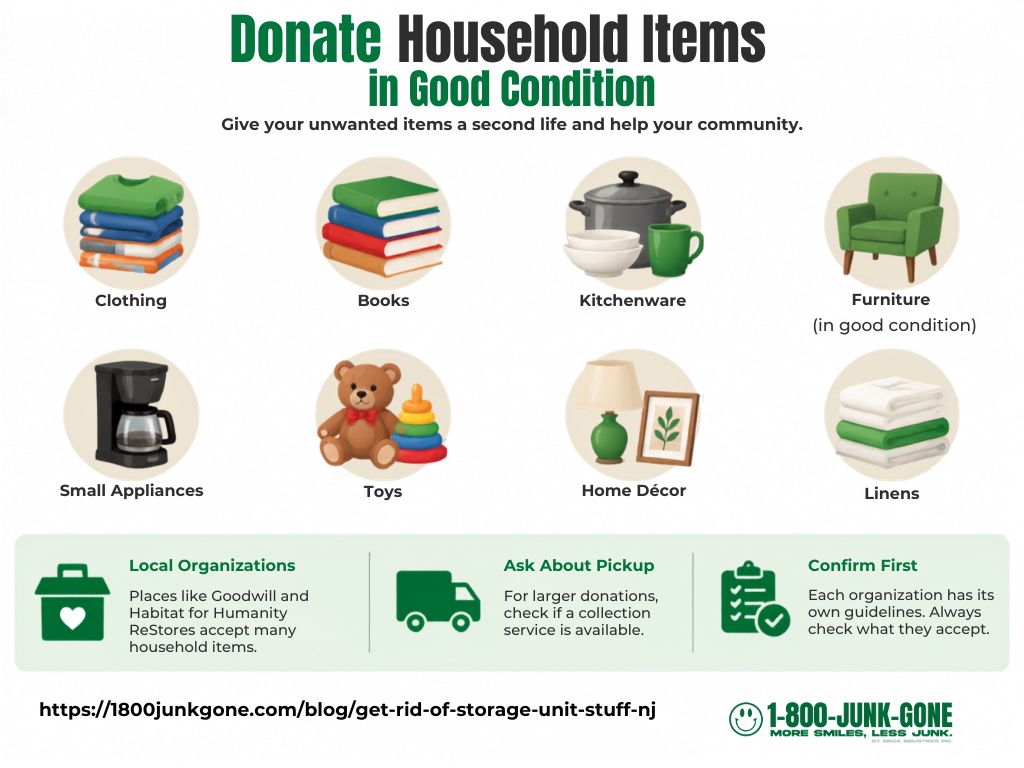
Habitat for Humanity ReStores commonly accept furniture, appliances, building materials, and household goods. Goodwill accepts many types of clothing and household items.
For larger donations, check whether the organization offers a collection service. A pickup can save you from loading furniture into a vehicle and making another trip during the cleanout.
Always confirm what a location accepts before bringing donations.
Separate Items That Need Special Disposal in New Jersey
Some storage unit contents need more attention than ordinary trash.
Electronics require special handling in New Jersey. Televisions, computers, monitors, printers, and other covered devices may need to go through an approved electronics recycling program.
Mattresses may also require a specific disposal option, depending on your municipality and the condition of the item.
Paint, solvents, certain cleaners, and other hazardous materials should follow local household hazardous waste rules.
New Jersey disposal requirements can vary by municipality, so check local guidelines when you are dealing with certain items.
Separating these materials early keeps them from getting mixed into general junk and slowing down the rest of the process.
Know When the Hard Work Is Better Handled by a Service
A storage cleanout usually becomes difficult at the point where decisions turn into physical work.
You may already know which furniture can go, which boxes are donations, and which appliances you no longer need. Those items still have to be carried, loaded, transported, and taken to the appropriate destination.
Professional help becomes useful when:
- The unit is packed
- You have heavy items
- Large furniture or appliances are involved
- You need the unit emptied by a certain date
- The contents require several vehicle trips
- You are dealing with an estate or family cleanout
- You have limited help available
- You want to stop paying storage fees promptly
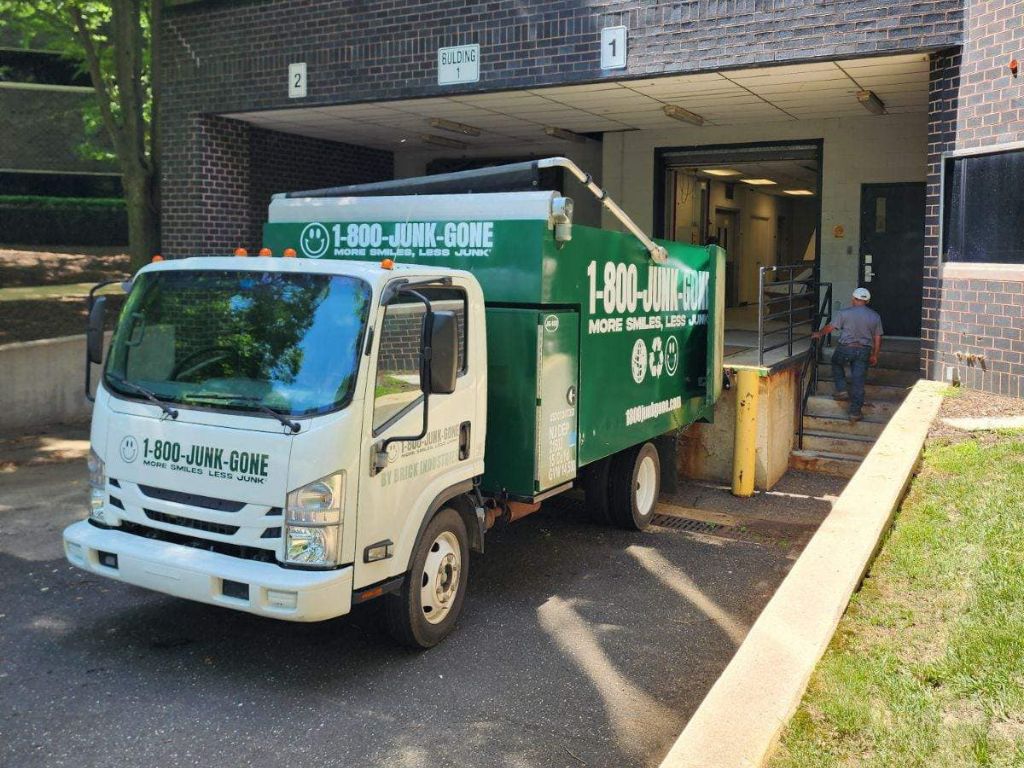
With 1-800-JUNK-GONE, the team can handle the lifting, truck space, hauling, and appropriate disposal involved in a storage unit cleanout.
That means you can focus on identifying the belongings that stay while the physical removal is handled for you.
1-800-JUNK-GONE is also an NJDEP-licensed A901 Hauler (#21602), which is especially relevant when a cleanout includes a substantial amount of material that needs proper disposal.
Compare the Cost of Help With the Cost of Delay
Hiring a service costs money. So does stretching a storage cleanout across several months.
A DIY cleanout may involve:
- Truck rental
- Fuel
- Disposal fees
- Donation trips
- Recycling trips
- Moving equipment
- Additional storage fees
There is also your time.

If the unit costs $150 per month and the cleanout keeps getting postponed, another three months means another $450 in storage fees.
For a smaller unit with a few boxes, handling the work yourself may make sense.
For a packed unit with furniture, appliances, heavy items, and multiple disposal needs, paying a team to finish the job can be a more practical use of both time and money.
The useful comparison is the total cost of finishing the project, rather than the service price by itself.
If You Still Need Storage, Keep the Space Intentional
You may finish the process and decide that the storage unit still serves a purpose.
In that case, use the cleanout to make the remaining space more useful.
Only keep items if you know why you’re storing them. Label boxes so you can find belongings without opening several bins. Place frequently needed items near the front and less frequently used materials toward the back.
You may also discover that everything you want to keep fits into a smaller unit.
Reducing the size of the unit can save money while still giving your house the extra storage space it needs.
The goal is simple: know what is in the unit and why you are paying to store it.
FAQs
How Long Does It Take to Clean Out a Storage Unit?
A typical storage unit cleanout may take around two to four hours, although the timing depends on the unit size, how much is packed inside, and whether furniture or other heavy items need to be removed. Larger or tightly packed units can require additional time.
Can Plastic and Glass From a Storage Unit Be Recycled?
Many plastic and glass materials can be recycled through local programs when they meet municipal requirements. Since accepted materials vary by location, New Jersey residents should check their town or county recycling guidelines for the items they uncover during a cleanout.
Does Donating Items From a Storage Unit Make a Difference?
Yes. Donating usable furniture, clothing, and household goods keeps those items in circulation rather than sending them toward disposal. Donations can also support local organizations and families who can put those belongings to use.
Finish the Storage Unit Cleanout Without Turning It Into Another Project
Getting rid of storage unit stuff does not require finding the perfect destination for every object.
Sell the valuable items that justify the effort. Donate household items in good condition. Separate recycling and materials that require special disposal. Keep the belongings that have a useful or meaningful reason to remain.
Then get the rest out.
If the volume, heavy lifting, or disposal logistics are holding up the process, 1-800-JUNK-GONE can handle that part for you.
The team provides storage unit cleanouts throughout New Jersey and can remove furniture, appliances, boxes, junk, and other unwanted items in one coordinated service.
You can review the junk removal cost guide for more information about pricing or contact 1-800-JUNK-GONE to discuss what is sitting in your unit.

Latest Articles
How to Get Rid of Old Furniture: Professional Removal Without the Hassle
Decluttering Tips for Hoarders: 10 Supportive Steps That Help You Move Forward